Kien Tra — Zen Tea Ceremony Space in Ho Chi Minh City
A mind still as water
Sipping tea in the clear wind
A pure cup of tea finds its true depth with a kindred spirit. "Jian Cha" (見茶) is a beautiful encounter between sacred clay, pristine snow water, and resonant souls.
The Philosophy of the Tea Person
One encounter awakens the true self
Seven bowls of tea purify the worldly heart
The core ideology governing the entire historical process and practice of Chinese tea ceremony, distilled into these four characters — a synthesis of Confucian, Taoist, and Chan Buddhist thought.
Stillness
The Supreme FoundationStillness here demands not merely a physical space separated from the world's noise and chaos, but more profoundly, it is a state of void, tranquil composure within the inner world of both the tea maker and the tea drinker.
Only when the mind reaches absolute stillness can one fully perceive every subtle transformation of flavor.
Heart-Mind
The Foremost Core ValueTea ceremony regards the tea maker as an artist, and the cup of tea as the most faithful mirror reflecting the state of their soul. The tea master must keep the 'Heart-Mind' still, clear, and intensely focused so that every physical movement achieves perfect precision.
The refinement of consciousness directly determines the quality of the final product — creating delicate, pure, well-rounded, and nutrient-rich flavors. If the heart is restless, carrying distractions or haste, the motions become crude, destroying the biochemical structure of the tea leaves.
Harmony
Balance of All Things'Harmony' embodies the perfect balance between human and nature, host and guest, water and tea leaf. Every element in a tea session must blend together without any overpowering or conflict.
Confucian philosophy emphasizes: the tea ceremony is a vehicle for establishing harmonious social order. Around the tea table, all class distinctions are temporarily set aside, replaced by equality and mutual respect.
Three Cups of Tea — Three Stages of Life
The First Cup
BitterA sharp, astringent bitterness on the tongue, symbolizing the turbulent years of youth — storms, trials, stumbles, and the crucible of hardship.
The Second Cup
Sweet & FullWhen the leaves have fully unfurled and released all their nutrients, delivering a sweet, rich fullness — representing maturity, when one achieves brilliant accomplishments and savors glory and happiness.
The Third Cup
Faint & SereneA faint, serene, crystalline flavor like spring water, symbolizing life's twilight — when one has weathered all rises and falls, shed all desires, and reached a state of equanimity, comprehending the impermanence of existence.
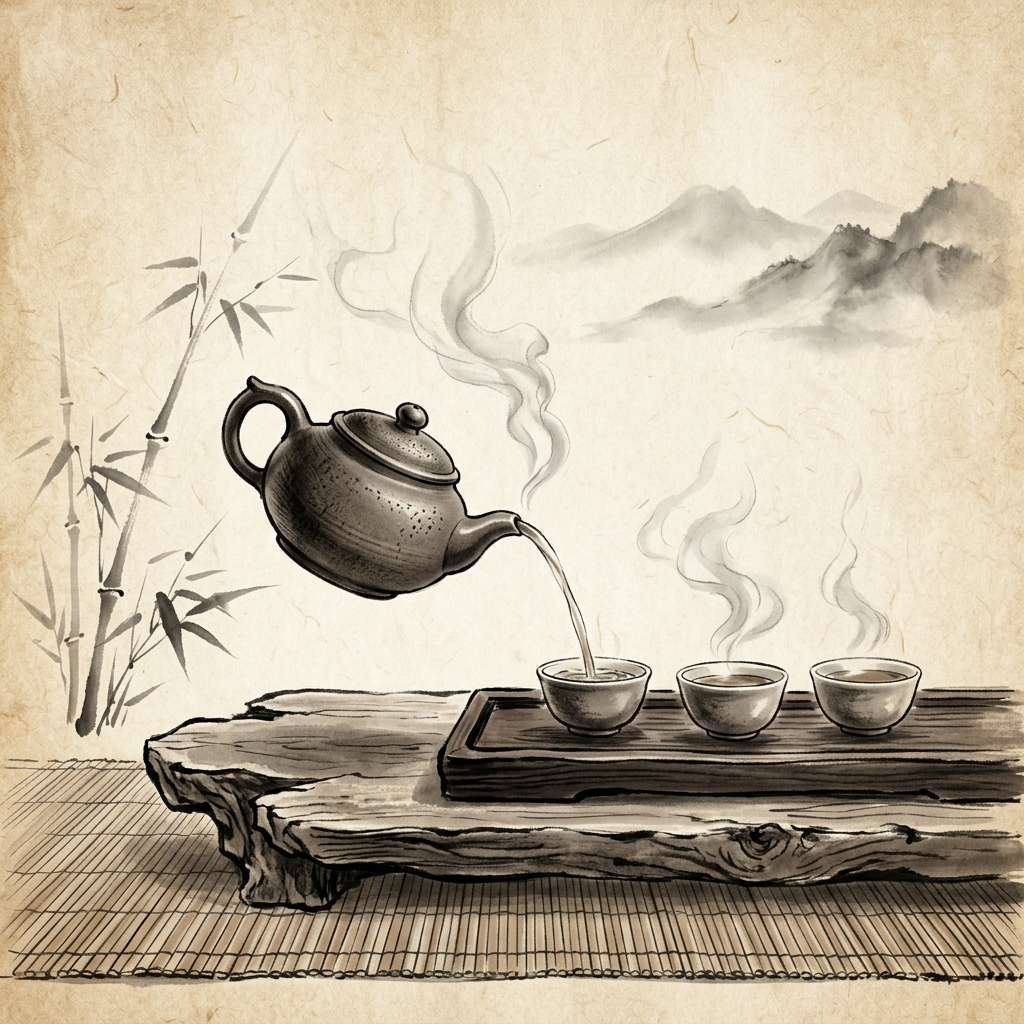
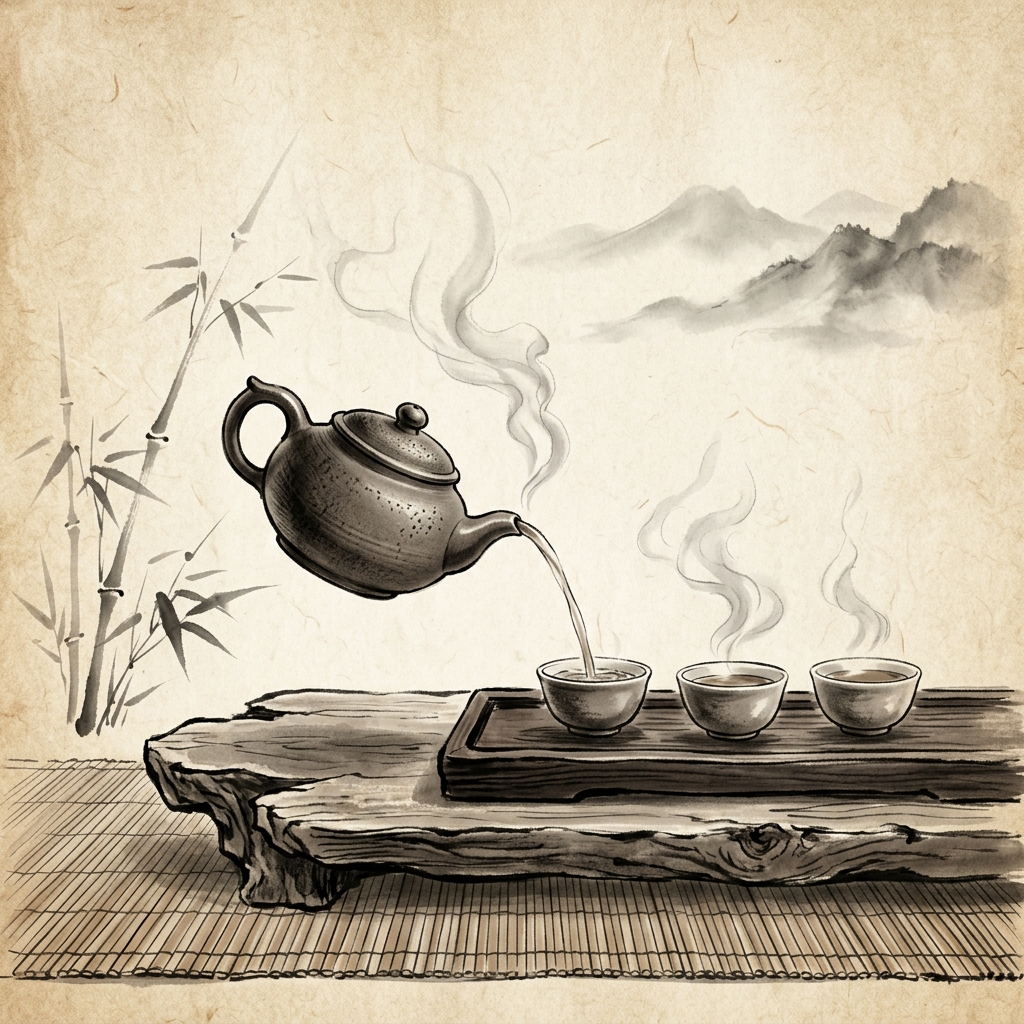
Sitting beside the teacup and sensing the transformation of flavors through each infusion, the tea practitioner lives fully and contemplates the entire arc of human existence. This contemplation transforms tea drinking into an authentic form of meditation.
The first bowl moistens my lips and throat.
The second bowl shatters my loneliness.
The seventh bowl I need not drink, I but feel a fresh wind blowing through my wings.
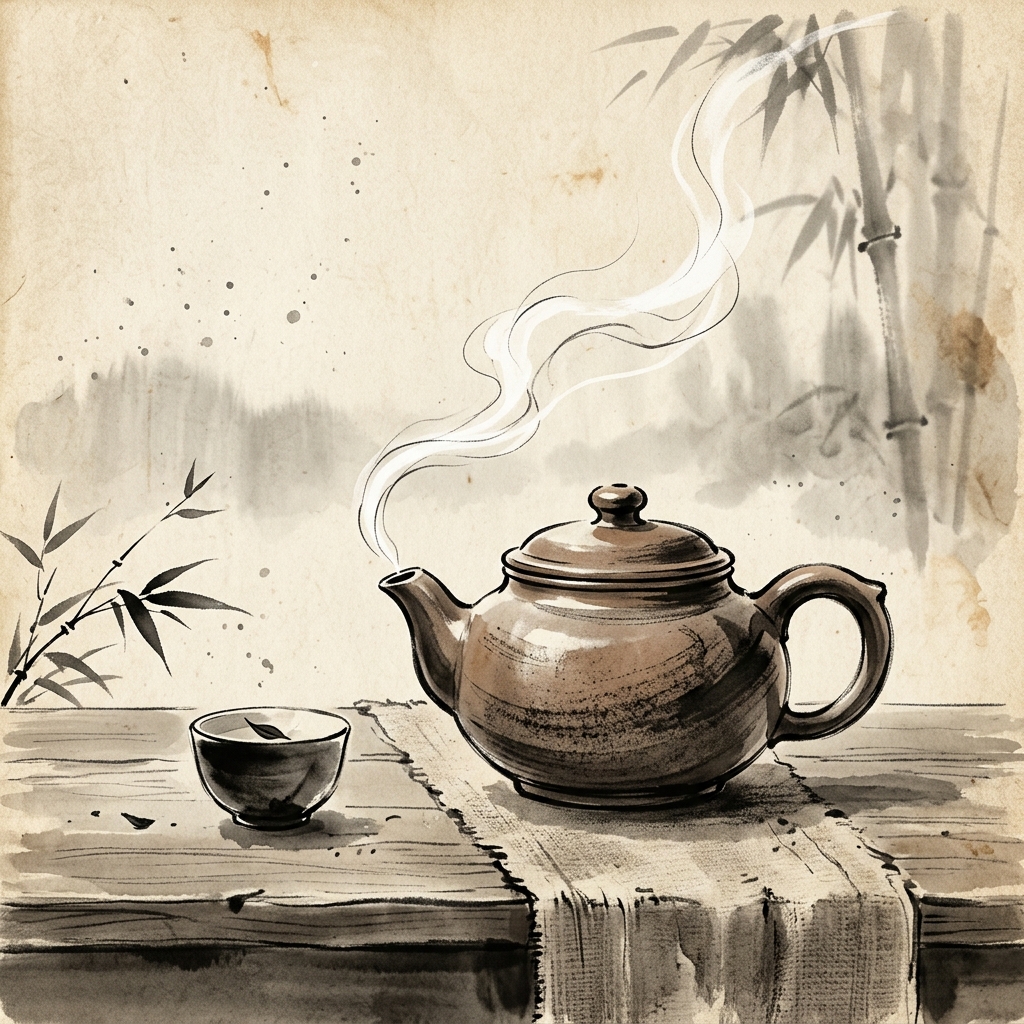
The Art of Zisha
A cup of clear tea for a true friend
The Zisha bone infused with heavenly fragrance
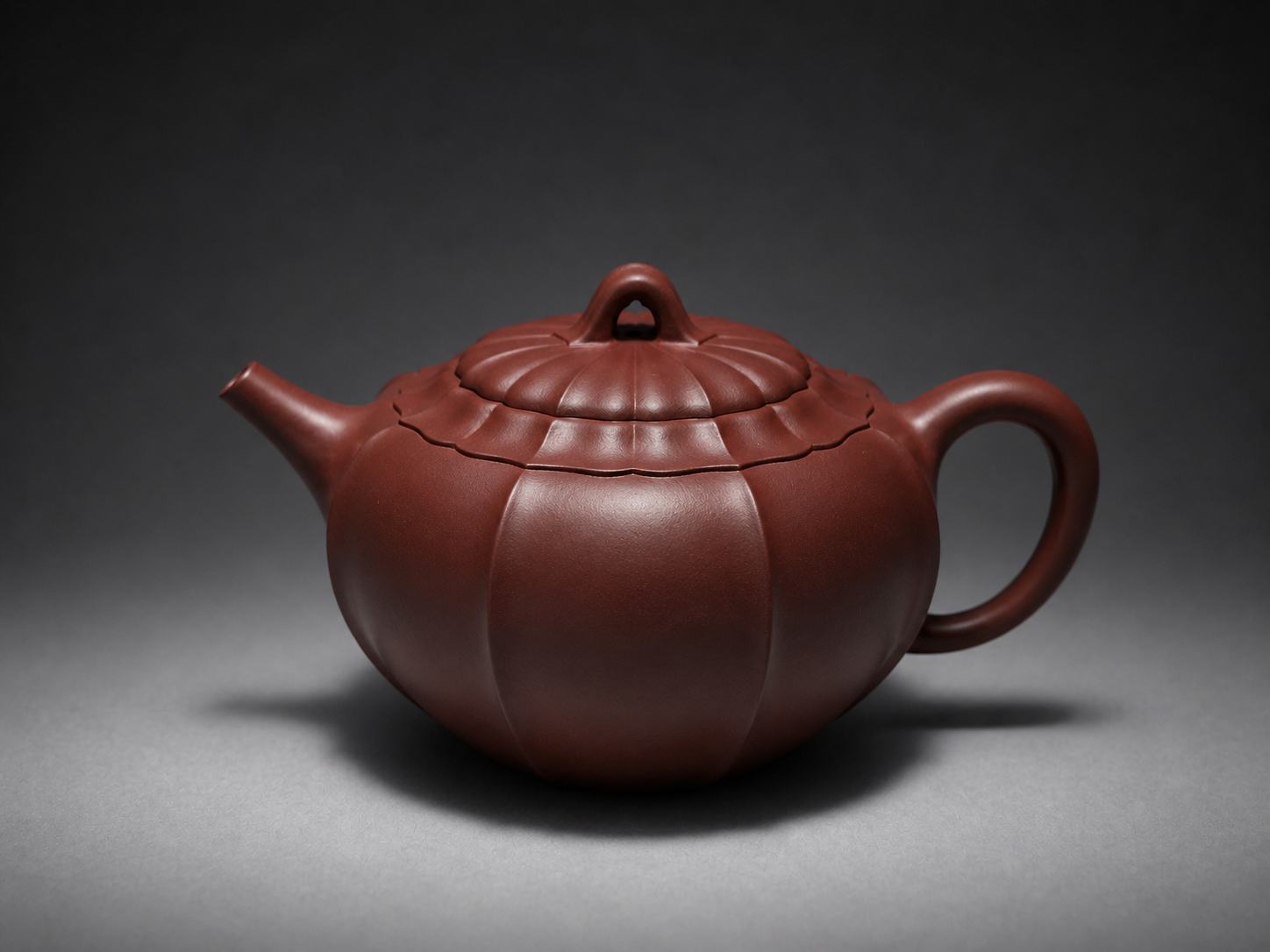
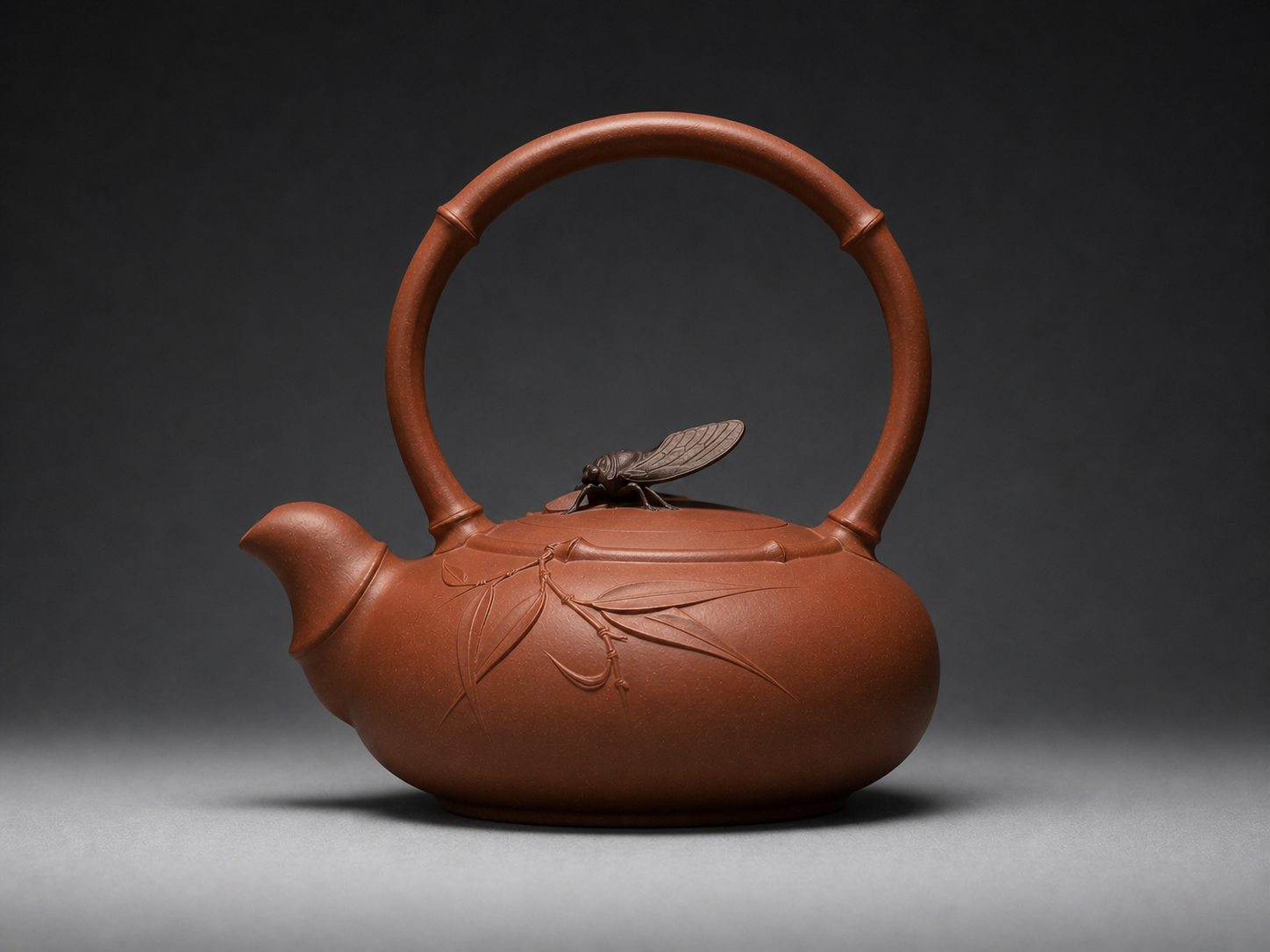
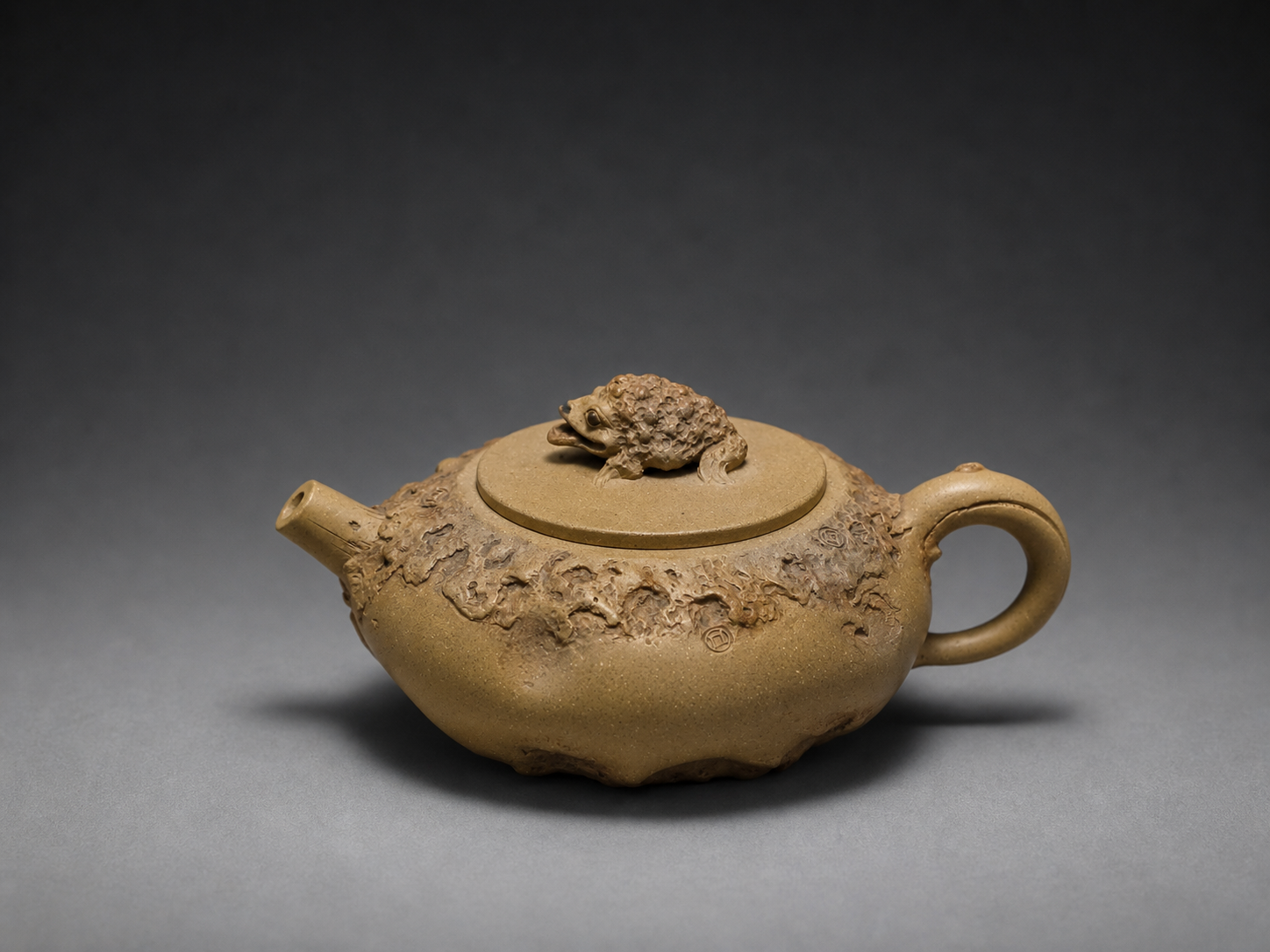
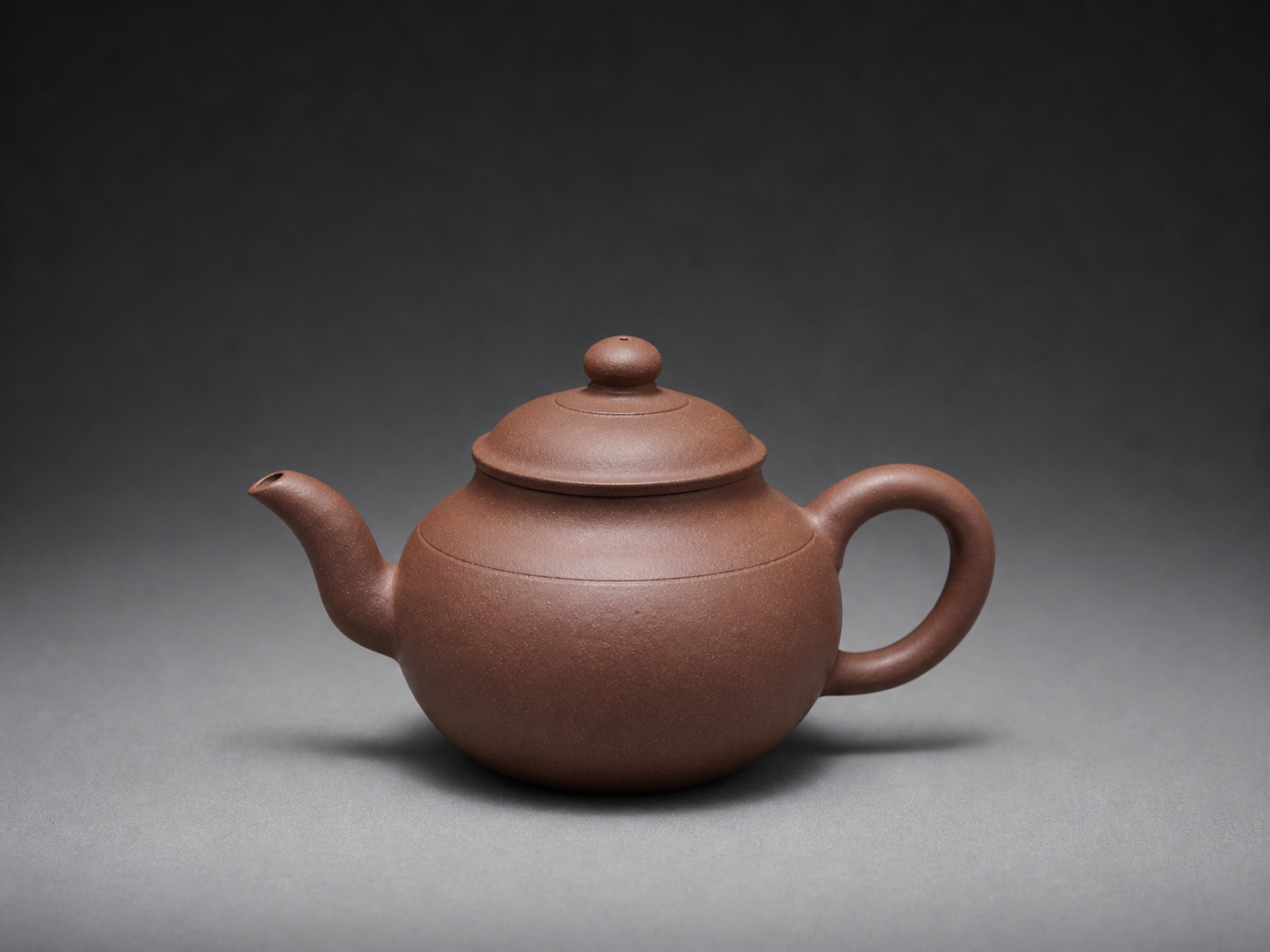
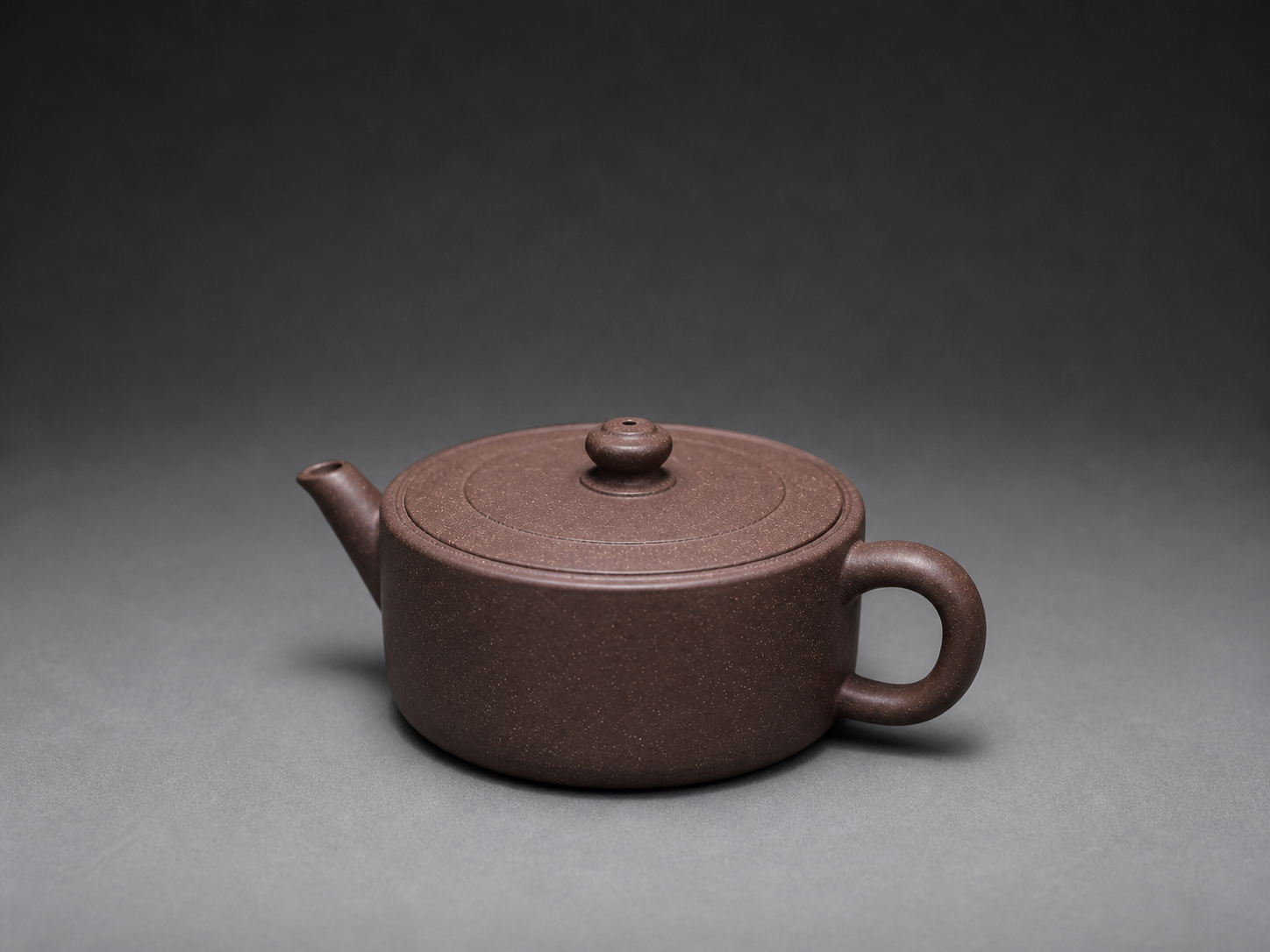
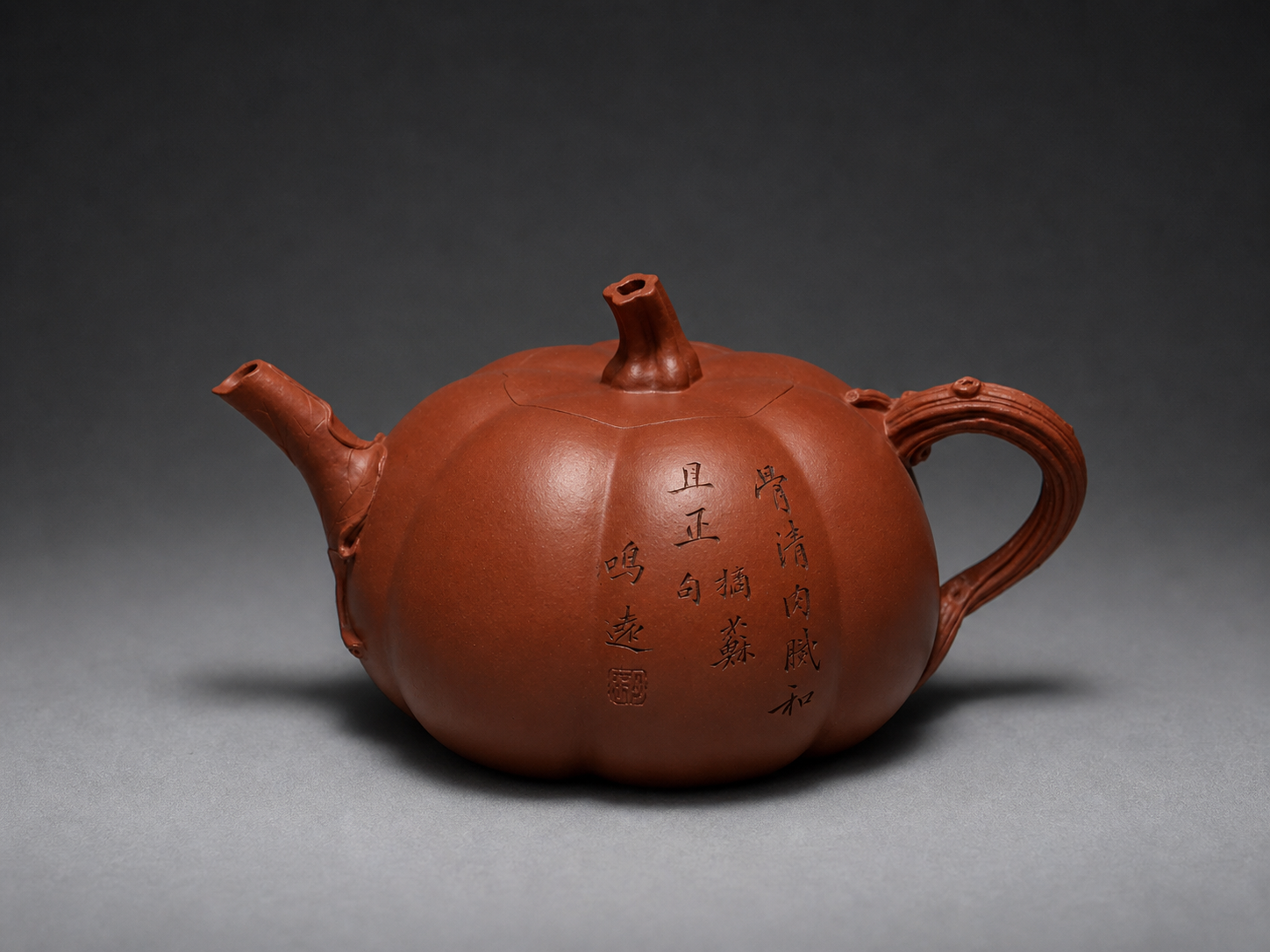
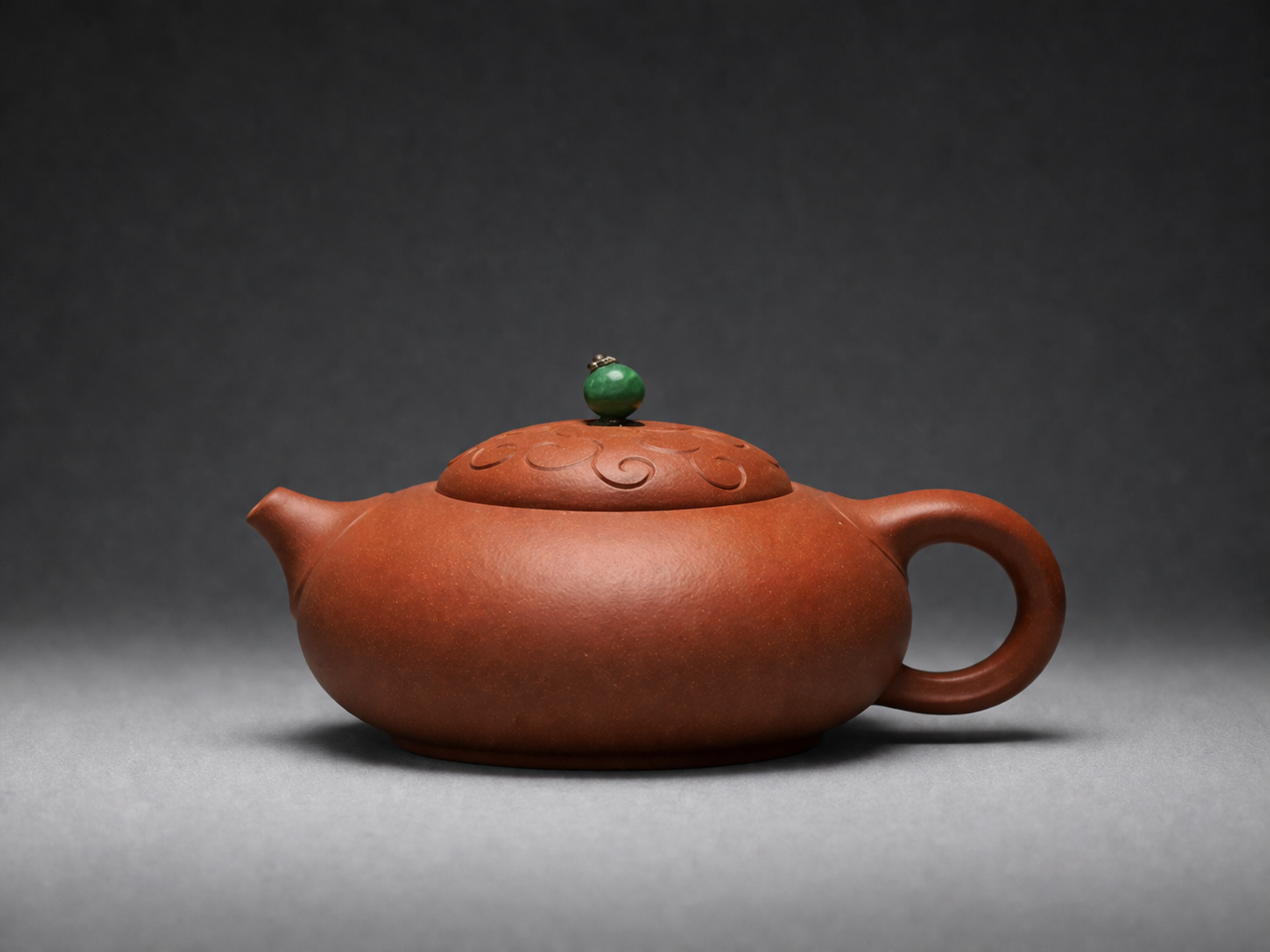
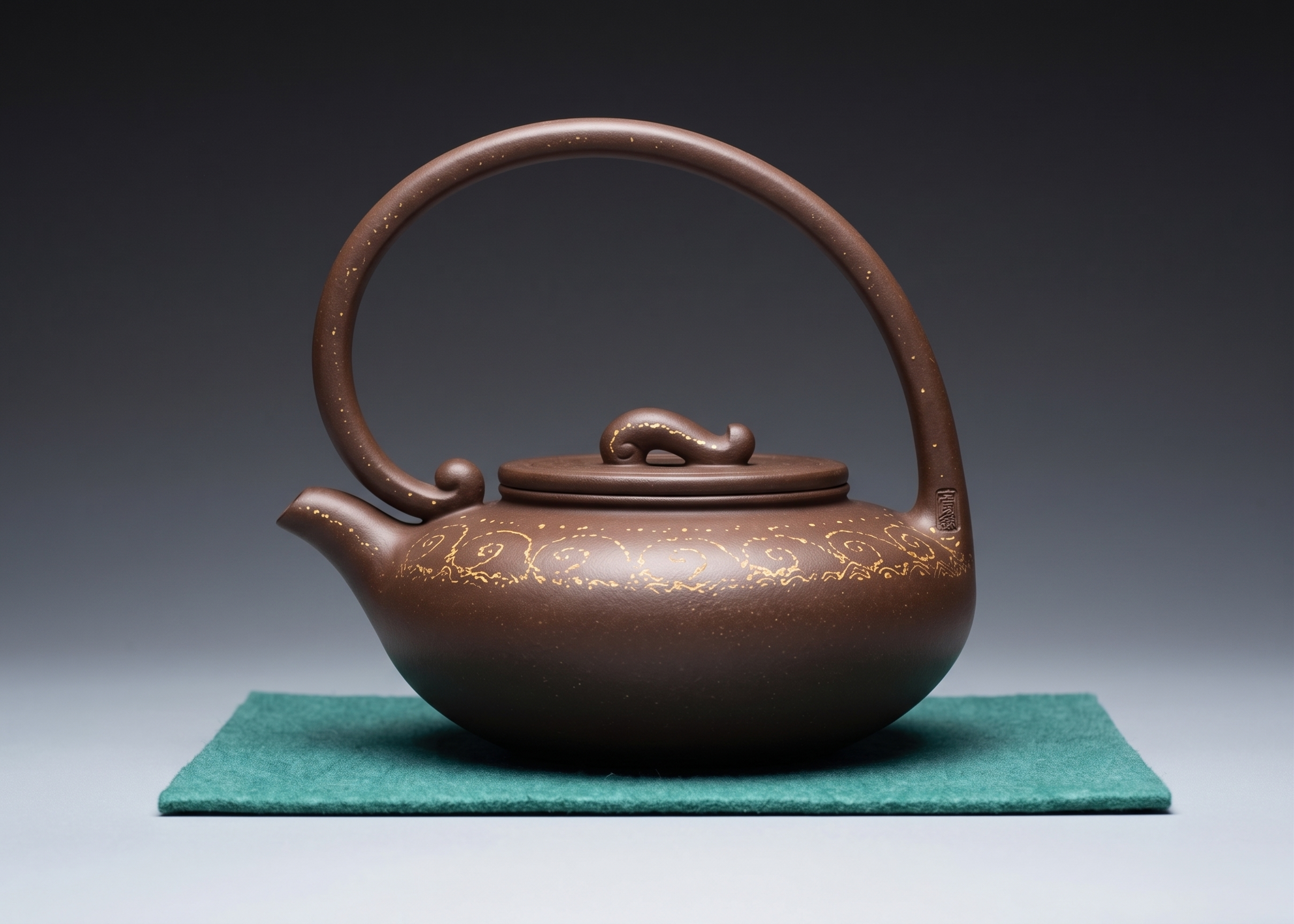
A Zisha teapot is not merely a static liquid container — it is a living entity that actively participates in the thermodynamic and chemical reactions throughout the entire tea extraction process. The birth of the Yixing Zisha teapot was a historically inevitable event, responding to the Ming Dynasty's revolutionary shift from powdered tea to loose-leaf steeping.
Zisha clay is an endemic mineral resource, mined primarily from the deep geological strata of Huanglong Mountain in Yixing, Jiangsu Province, China.
The extraordinary micro-property that makes Zisha inimitable is its dual-porosity structure. After high-temperature firing, the natural blend of minerals — iron, quartz, and mica — creates a dense network of microscopic pores across the ceramic surface.
This structure grants the Zisha teapot remarkable breathability without any water leakage. Oxygen continuously permeates inward, preventing the tea liquor from becoming stale or degraded. Simultaneously, these pores act as a filter and absorption engine, retaining tea essential oils and polyphenols.
Zi Ni (Purple Clay)
The most popular and renowned clay, with its characteristic purple-brown hue and ideal porous structure for superb absorption. Excellent at neutralizing musty and stale odors from fermented teas. The rare Zi Jin Sha sub-type requires a firing temperature of 1180°C.
Zhu Ni (Vermillion Clay)
Extracted from the hard rock strata of Huanglong Mountain, it transforms into a captivating vermillion red after firing. Its extreme shrinkage during firing creates a high-density, low-porosity surface. Provides maximum heat retention, accelerating essential oil diffusion for intense fragrance and softening astringency.
Lu Ni (Cyan Clay)
A pale, cool-toned clay (yellow-green to grey-cyan). Its structure delivers the highest breathability among all Zisha clays, enabling rapid heat dissipation, purifying the tea liquor, and preserving its pristine freshness. Best paired with green and white teas.
Da Hong Pao Clay
An exceptionally rare clay with a vivid crimson hue, born from its extremely high iron oxide content. Its marvel: when boiling water is poured, the pot's color visibly transforms, flushing deeper red and revealing a radiant, glowing aura.
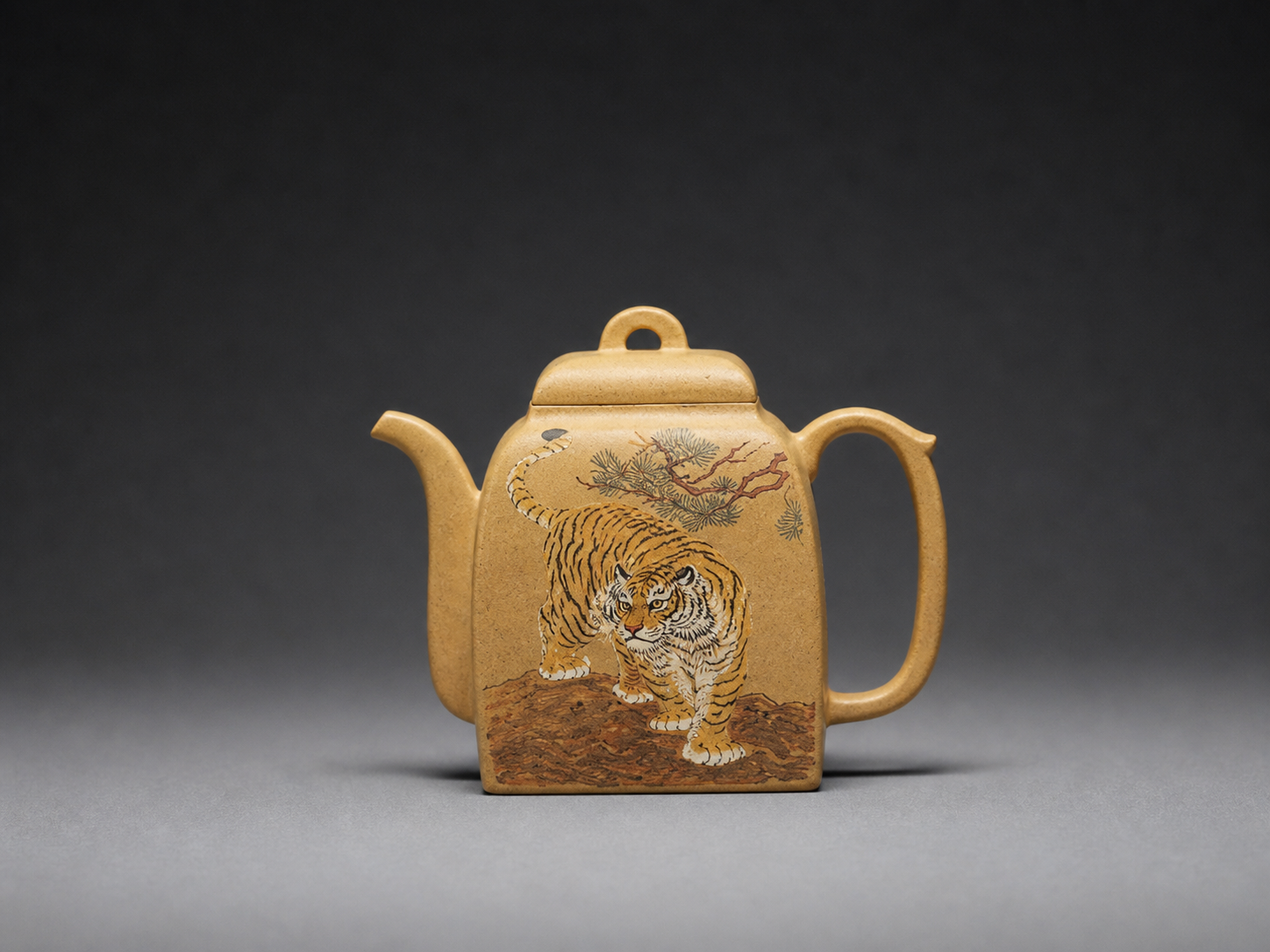
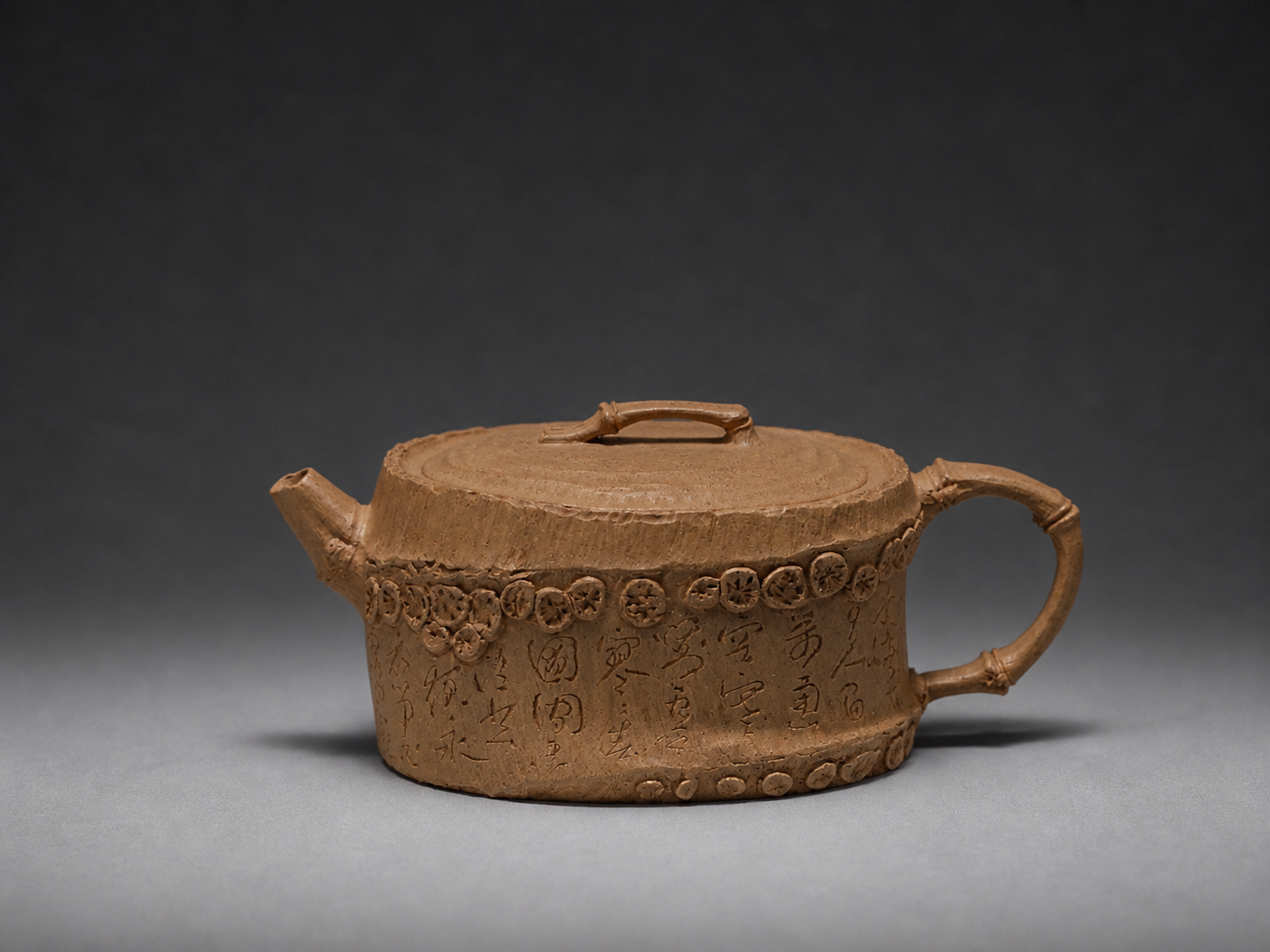
Fully Handmade
The radiant pinnacle — a convergence of artistry and the potter's soul. The artisan uses no molds. Using primitive wooden tools, they beat, pat, smooth, and shape each strip of clay. This rhythmic hand-force rearranges mineral grains into a natural order, creating a perfect dual-porosity structure without over-compressing the bonds. The result: unmatched tea oil absorption and the fastest patina development.
Semi-Handmade
A harmony between traditional craftsmanship and mold technology. The artisan still processes the clay by hand but presses it into a mold for shaping. The mechanical pressure compacts surface mineral grains, partially sealing the pores. Semi-handmade pots breathe less freely and develop patina more slowly, yet preserve the core properties of Zisha.
Selecting the right pot for a specific tea is a precise science of thermodynamics and spatial geometry. The supreme rule: each Zisha teapot should only be used exclusively for one type of tea.
Maximum heat retention, forces leaves to unfurl, concentrates aroma, softens astringency.
Rapid evaporation, emergency cooling, prevents vitamin C destruction and tannin buildup.
Ultra-fast drainage prevents over-steeping, porous structure filters musty warehouse odors.
A new Zisha teapot has only completed half its life journey. The other half — measured by the deep, luminous patina (Bao Tương) — depends entirely on the long-term biological interaction between tea essential oils and the owner's care.
Over time, the pores retain tea oil molecules and polyphenols, building a lustrous organic film — known as 'tea cream' or 'patina' — transforming the pot into a soulful work of art.
The Space
Every space at Kiến Trà is designed as a living work of art — where light, wood, stone and nature converge to create a sanctuary for the soul.
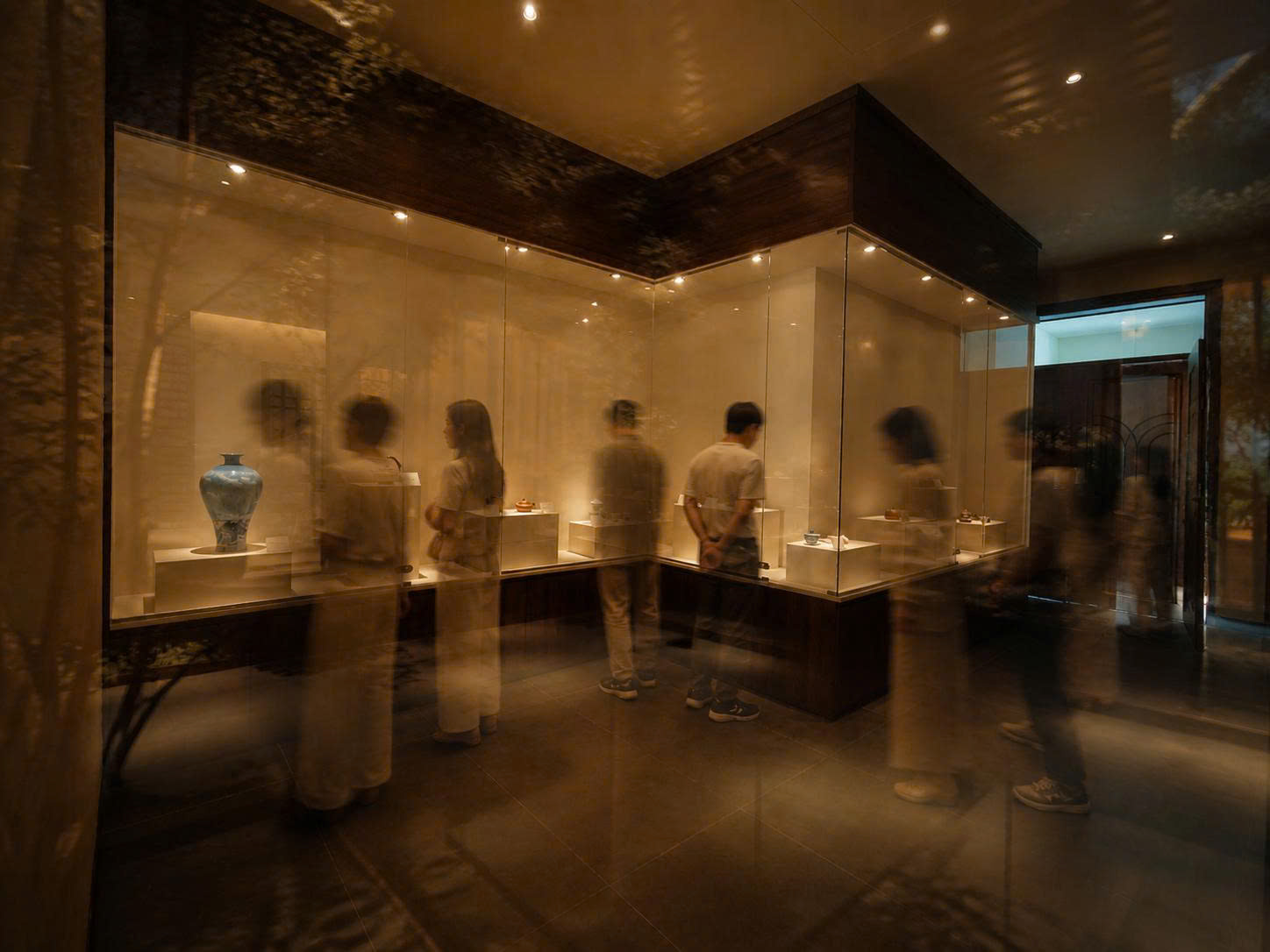
The Vault — Exhibition Hall
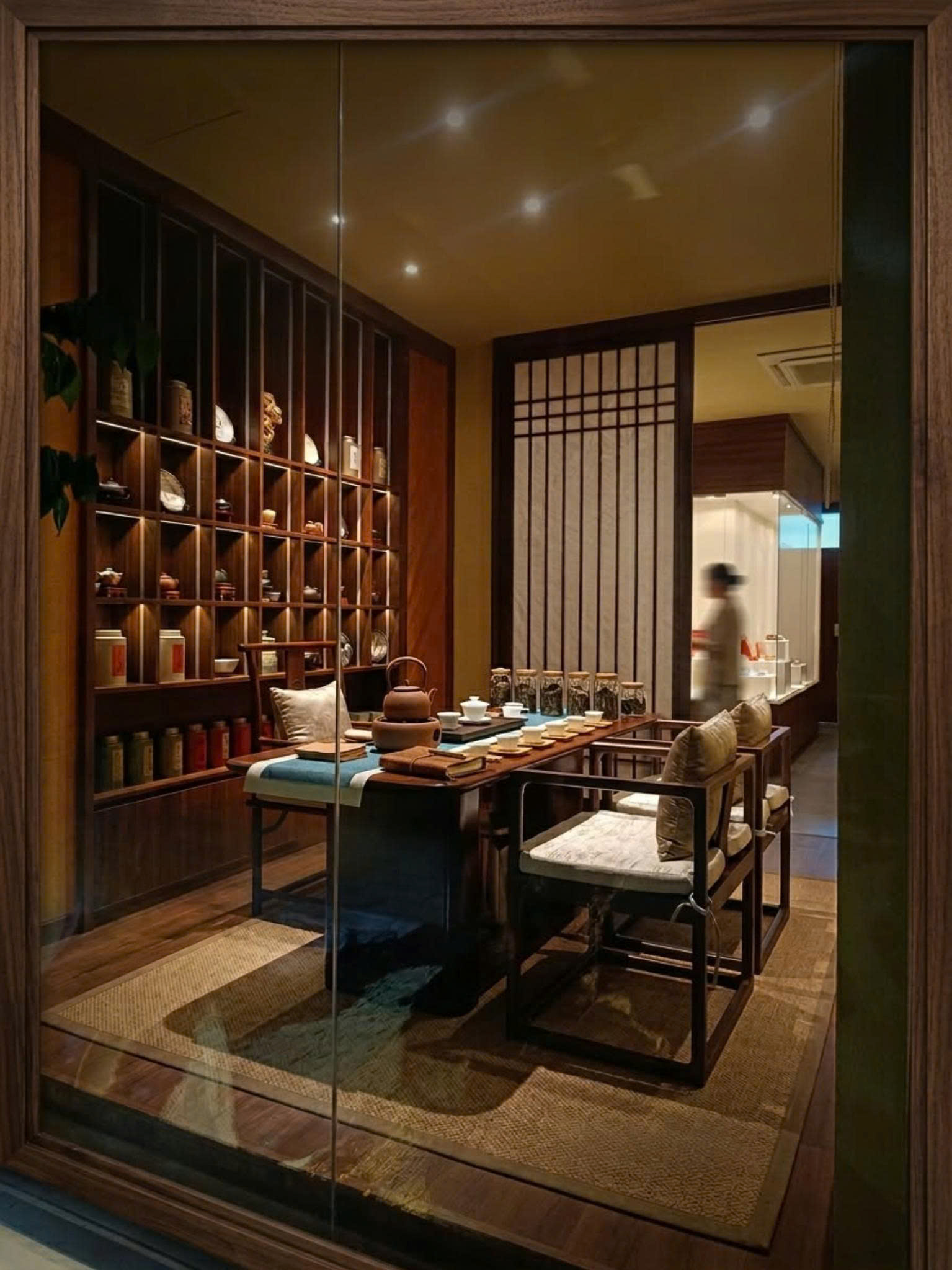
Tea Chamber — Tasting Room
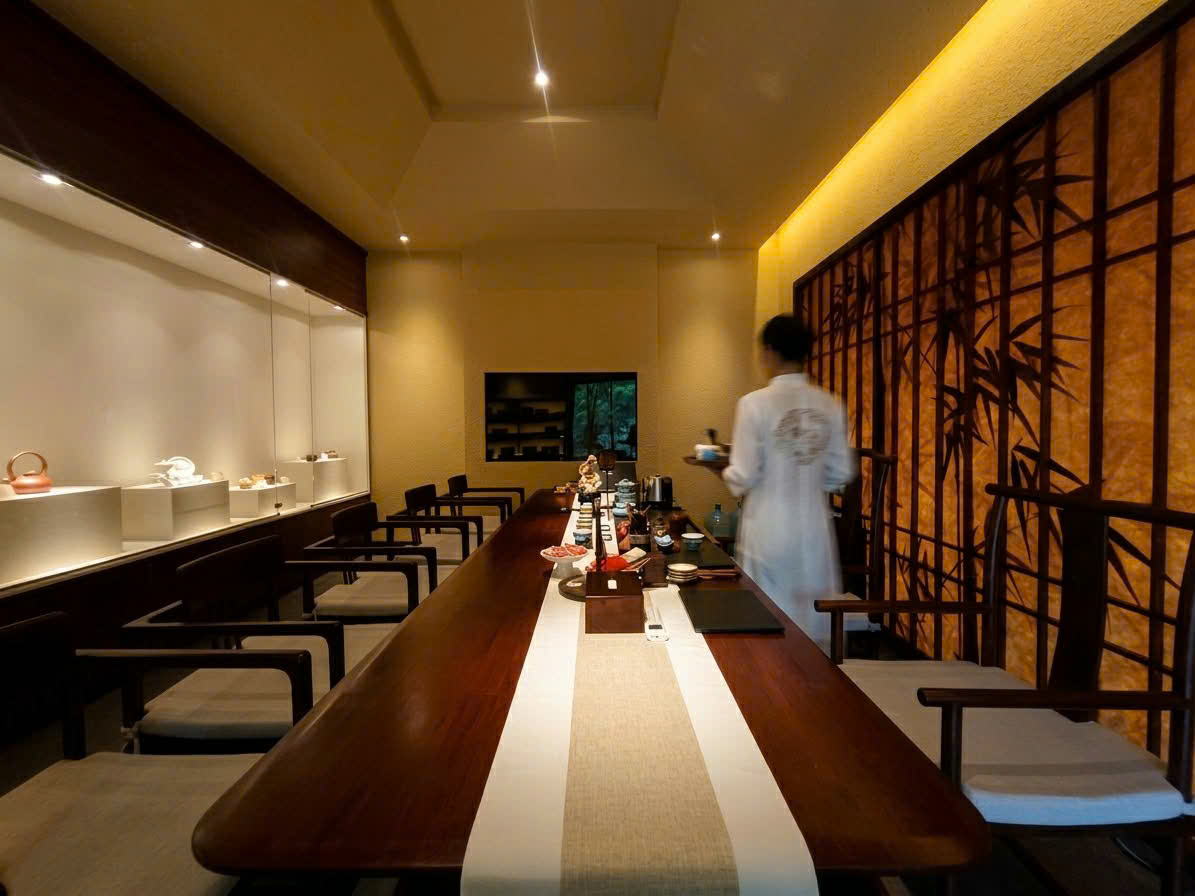
Zen Hall — Grand Ceremony Room
Exclusive Tea Sessions
Register for premium, limited-seat tea tasting events at Kien Tra
Preparing Future Sessions
No upcoming tea tasting sessions are currently scheduled. Please check back later.
Frequently Asked Questions
Learn more about Kien Tra tea space, authentic Yixing Zisha art, and traditional Gongfu ceremonies.
28 Khu Thủ Thiêm / 19 Tố Hữu, Lô Lakeview 1, An Khánh, TP. Hồ Chí Minh, Vietnam. Contact: +84815385777.
A Yixing Zisha teapot (紫砂壶) is made from rare purple clay found only in Yixing, Jiangsu Province, China. Each teapot is a unique work of art that absorbs the aroma of tea over time, enhancing the flavor with every brew.
The Chinese Gongfu tea ceremony (功夫茶) is the art of brewing tea with the philosophy of Harmony, Tranquility, Joy, and Truth. At Kien Tra, you can experience the full ceremony with premium teas and rare Yixing zisha teapots.
You can book directly on kientra.com or call +84815385777. We are open daily from 10:00 to 20:00.
一
会
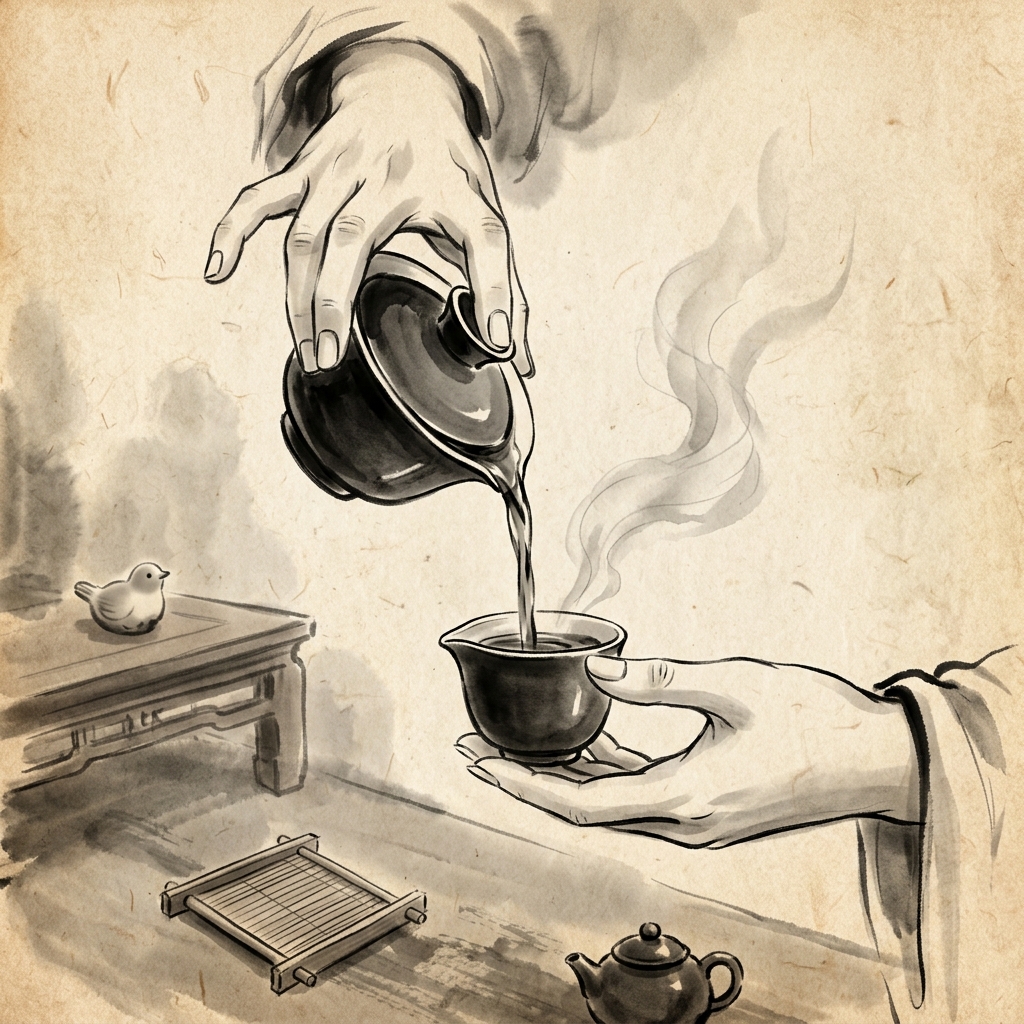
Invitation Letter
Incense smoke welcomes kindred guests
Pure tea awakens timeless friendship